
September 2026 S M T W T F S 1 2 3 4 5 6 7 8 9 10 11 12 13 14 15 16 17 18 19 20 21 22 23 24 25 26 27 28 29 30 Archives
-
Recent Posts
What’s the capital of South Dakota?
In fifth grade I memorized the capitals of all fifty states. It took a while, and I got 100% on the test. To my knowledge that information has not helped me one single time since fifth grade. Fortunately I have Google today and any time I need to know some tidbit of trivia (sorry South Dakota) it takes about two seconds.
But how do I find the answers to more difficult questions? I am talking about the kinds of questions I am more likely to get.
Who is this?
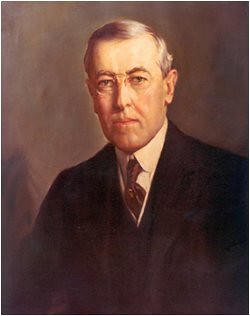
I put together a search activity for my class. How many of these can you find?
How many can you find in two seconds?
What is the significance of this formula?

It looks like a circle with a line across the top and the bottom. What is the significance of the logo on the green shirt of the guy standing on the left side of this picture?

What is this substance?

The picture below is a movie poster. According to the poster, what is the main topic of the movie?

What is the name of this painting?

The pictures below are of the same tree. What kind of tree is it?



Digital Footprint Video
I saw this video posted on Wes Fryer’s blog. I’m requiring my students (who have been creating online Positive Digital Footprint resources) to watch it.
Did you know 4.0
I saw these videos on Garr Reynolds’ web site. If you have liked the original “Did You Know” videos, you will definitely like these.
What do you use a word processor to do?
The fall semester is in full swing. It’s the third week which means it’s time for the first big test. The topic happens to be word processing.
Before we started using a word processor in class, we spent a little time talking about the types of documents real teachers create. Teachers don’t write twenty page papers with end notes (unless it’s for a graduate class). Instead teachers create tests, newsletters and maybe some forms or permission slips.

In elementary school, each of my kids brought home a weekly news letter with a couple of paragraphs of important information about upcoming events and a few pictures of students and projects from the week before. We received one every week for the whole year. That’s about 36 newsletters.
We talked about this in class and then we looked at the kinds of information which goes into a typical newsletter. We inserted pictures into our word processors, resized them and cropped them. Then we manipulated text around our pictures. The idea was to gain the understanding required to incorporate different kinds of media into a document quickly and easily. Teachers are all bound by one universal force… a limited amount of time.
The shock came when we went over the first assignment and the students saw there were half a dozen different ways to complete the activity correctly. They are usually looking for that one “correct” answer and it tends to limit how they approach problems. I want them to understand the mechanics of the software enough that they can decide the most efficient way of completing a task. The only way to know that path is to explore.
I threw them a curve ball on the test. I asked that the top and the bottom sections of the page be clearly divided by a dotted line so that a parent would know where to cut the page. This was the most missed item on the test. I saw many trying to insert a table and then make the top line dotted. A few tried inserting a line and then changing the properties to a dotted line. Less than 10% of them did it the old fashioned way by typing hyphens and spaces – – – – – – -.
The most creative was a variation of the old fashioned way. Three hyphens followed by a space and hyphen. Copied and pasted repeatedly it looks like this.
— – — – — – — – — – — – — – — – — – — – — –
More than anything I was bothered by one comment from a student. “I could think of a couple of ways of doing it. I tried the first and it didn’t work. So I gave up.”
Most problems can be solved more than one way. Trial and error is a great learning process especially when working on a creative piece. I have learned more from doing things the wrong way on my way to the correct answer than I could have ever learned by following someone else’s step-by-step “assembly line” process. If you haven’t noticed, most assembly lines are manned by robots.
Posted in edtech
4 Comments